
.svg)


.webp)
The conversation around AI-generated music just took another significant turn.
TIDAL has announced a new policy aimed at increasing transparency around AI-generated content while protecting artists from impersonation and fraudulent releases. The update reflects a broader shift across the music industry as streaming platforms work to balance innovation with artist rights.
Here's what the new policy means—and what independent artists and labels should know.
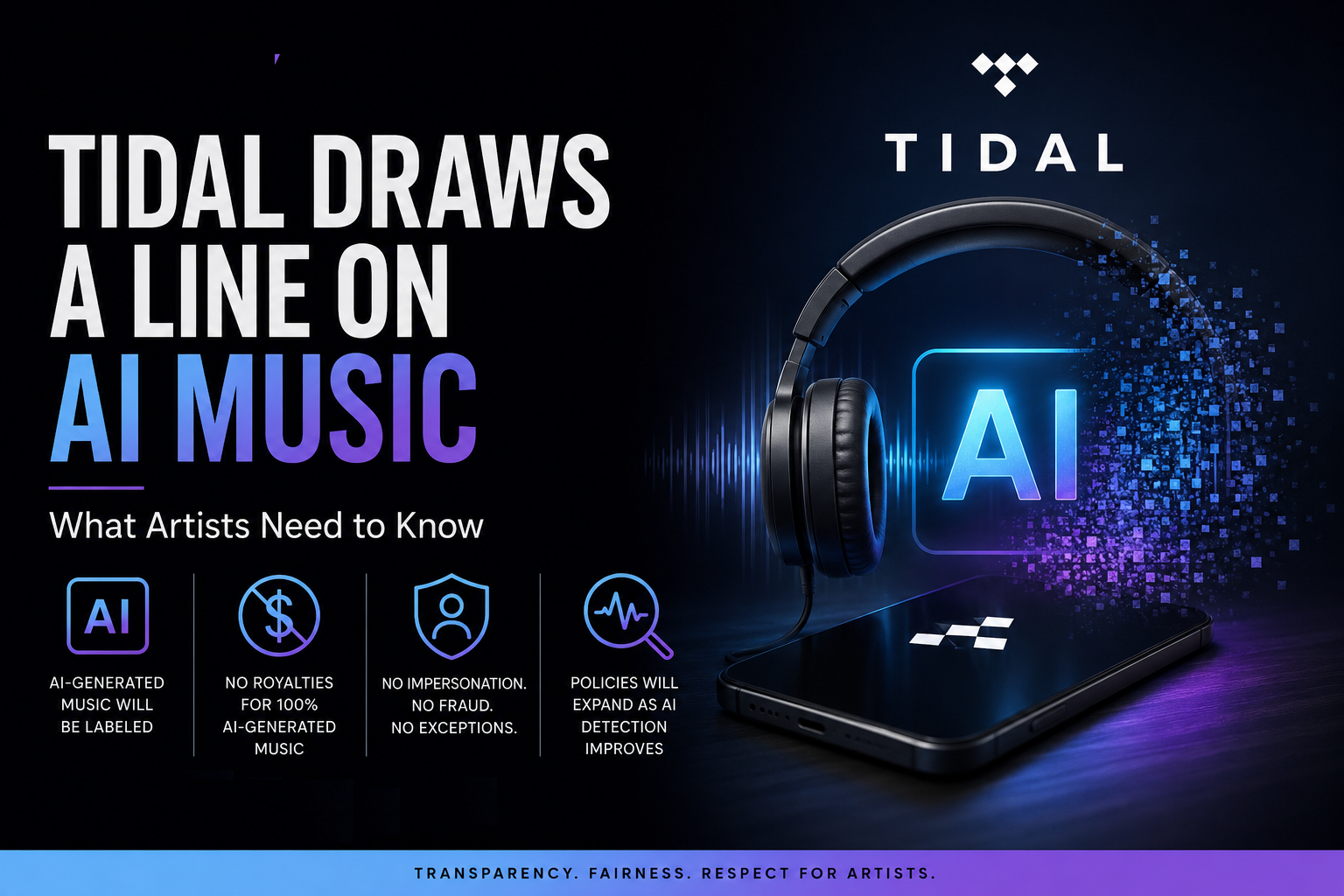
One of the biggest changes is that TIDAL will begin identifying music it determines to be 100% AI-generated. Tracks that meet this threshold will receive an AI badge within the platform, giving listeners more context about how the music was created.
This move aligns with growing industry calls for transparency as AI-generated content becomes more common.
Perhaps the most impactful update is TIDAL's monetization policy.
According to the company's announcement, music that is determined to be entirely AI-generated will not be eligible for royalties. In addition, these releases won't qualify for direct-to-fan sales through the platform.
For artists using AI as a creative tool, it's important to note that the policy specifically addresses 100% AI-generated music, not songs that incorporate AI-assisted production techniques.
The platform is also taking a firm stance against AI-generated music designed to imitate real artists or facilitate fraud.
TIDAL says it is implementing automated detection systems to identify and remove releases that impersonate artists, bands, or other creators.
This is welcome news for independent musicians, many of whom have expressed concerns about unauthorized AI clones of their voices and musical styles.
TIDAL also noted that these policies may eventually expand beyond fully AI-generated music.
As AI detection technology improves, the company plans to address music that is substantially AI-generated, suggesting this is only the beginning of a broader evolution in streaming platform policies.
AI is becoming an increasingly valuable tool for songwriting, production, mixing, mastering, artwork creation, and marketing. Used responsibly, these technologies can help artists work more efficiently and bring creative ideas to life.
However, streaming services are making it clear that there is a distinction between AI-assisted creativity and fully autonomous AI-generated content.
For independent artists distributing music through platforms like Octiive, the safest approach remains:
TIDAL joins a growing list of companies establishing formal guidelines around AI-generated music. As technology continues to evolve, artists can expect more platforms to introduce policies covering disclosure, monetization, and rights management.
While the rules are still taking shape, one trend is becoming increasingly clear: streaming services are prioritizing authenticity, transparency, and protection against fraudulent AI content.
For independent musicians, that's a reminder that the most valuable asset in today's music landscape remains something AI can't replicate—your unique artistic voice.
.webp)
.webp)

