
.svg)


.webp)
There’s a meaningful shift happening in the DJ ecosystem right now, and it’s worth paying attention to.
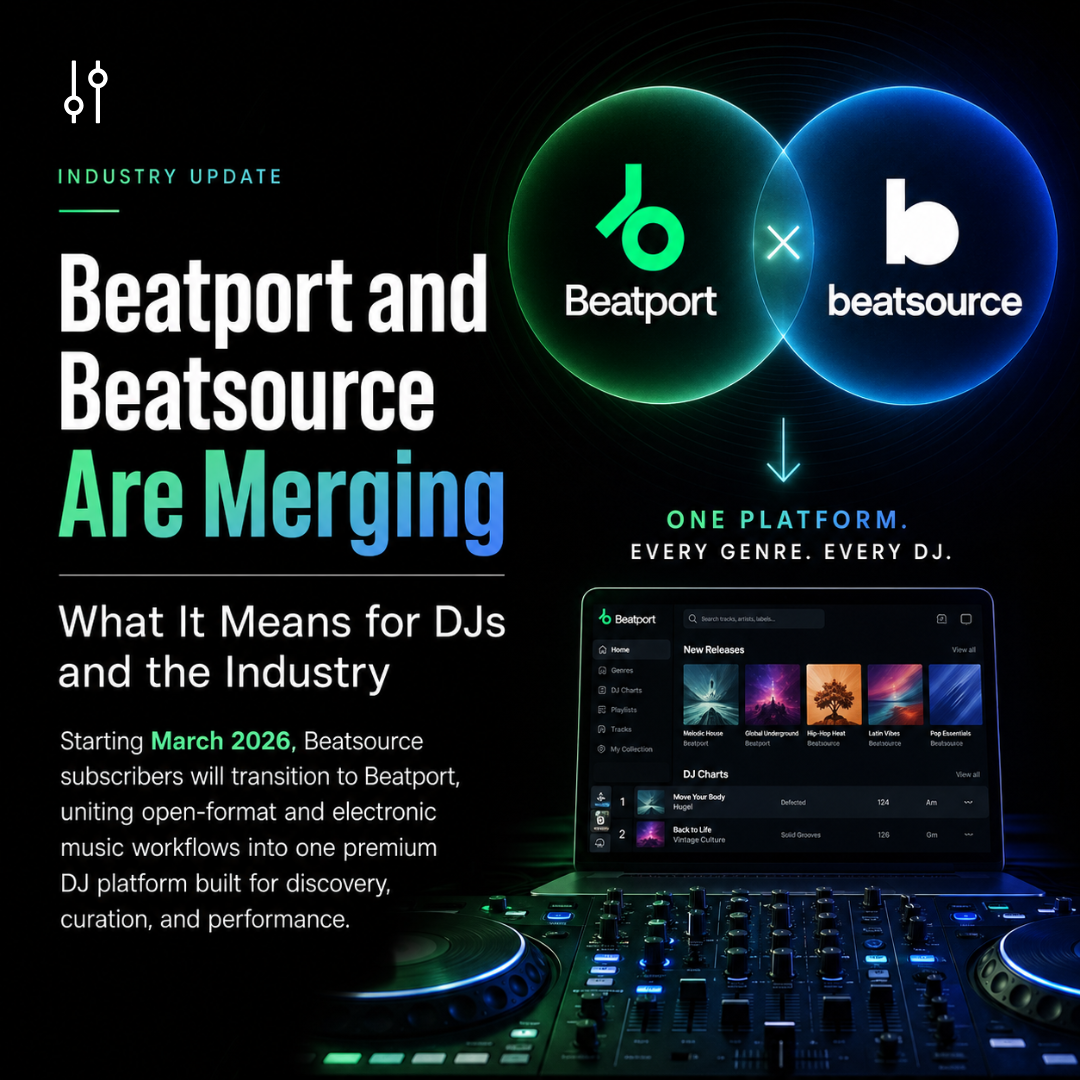
Beatport has announced that it will fully integrate Beatsource into its platform starting in March 2026. On the surface, this might look like a simple product update. In reality, it’s a much bigger move — one that brings two historically separate DJ workflows, electronic and open-format, into a single environment.
Over the coming months, Beatsource subscribers will be gradually migrated into Beatport through a phased rollout. Once the transition is complete, Beatsource as a standalone platform will no longer exist. Everything — from user accounts to playlists, streaming plans, and even purchase history — will live داخل Beatport. The intention is to make the process as seamless as possible for users, but the broader impact goes beyond just convenience.
What Beatport is really doing here is consolidating how DJs discover, organize, and play music. By combining Beatsource’s curated open-format catalog — spanning hip-hop, pop, Latin, and more — with Beatport’s deep electronic music library, they’re creating a single platform that more accurately reflects how DJs actually perform today.
Most DJs aren’t staying in one genre anymore. Sets move fluidly between styles, and discovery doesn’t happen in silos. The line between electronic and open-format has been fading for years, and this move formalizes that shift. It’s not just about having more music in one place — it’s about owning the entire workflow, from discovery and curation to library management and performance.
There are also some changes tied to subscriptions. Beatsource users will see their plans transition into Beatport tiers, with entry-level subscribers moving into Beatport Advanced and Pro+ users shifting into Beatport Professional+. While there is some pricing adjustment at the lower tier after an initial grace period, the overall positioning is clear: a more unified system with broader access.
Zooming out, this is part of a larger trend we’re seeing across music tech. Platforms are becoming more vertically integrated, aiming to control more of the creator and DJ workflow in one place. Distribution, discovery, and performance are increasingly connected, and fewer platforms are playing a bigger role in shaping how music moves.
For artists and rights holders, that has real implications. As ecosystems consolidate, visibility becomes more dependent on platform dynamics — curation, playlists, and internal discovery tools matter more than ever. For DJs, the experience becomes simpler, but also more centralized.
From our perspective at Octiive, this is less about one platform update and more about where the industry is heading. When a platform like Beatport expands beyond its core and becomes a broader, cross-genre destination, it changes how music needs to be positioned to reach DJs effectively.
We’ll be watching closely as this rollout continues, especially in terms of how it impacts independent artists and the broader DJ community.
.webp)
.webp)

