
.svg)


.webp)
As streaming continues to dominate music consumption, Spotify playlists remain one of the most powerful discovery tools for artists in 2026. Whether you’re an emerging independent artist or a more established one, being featured on the right playlists can significantly increase your streams, followers, and long-term fanbase.
However, the playlisting ecosystem has become more competitive and more sophisticated. Simply uploading a track and hoping for organic discovery is no longer enough. Artists now need a clear, structured playlisting strategy that combines editorial pitching, independent curator outreach, and algorithmic growth, all while staying authentic and compliant with Spotify’s rules.
This article breaks down how playlisting works in 2026, what has changed, and how artists can realistically land in impactful Spotify playlists.
Spotify playlists can be grouped into three main categories: editorial playlists, algorithmic playlists, and independent or user-generated playlists. Each plays a different role in an artist’s growth journey. A successful playlisting strategy doesn’t rely on just one of these, it’s combining all three together.
1. Editorial playlists
Spotify editorial playlists remain some of the most influential placements on the platform. Getting featured on playlists like New Music Friday or genre-specific editorial lists can introduce your music to thousands or even millions of listeners in a couple of days.
To be considered, artists must submit unreleased music through Spotify for Artists, and timing is crucial: submissions should be made at least three to four weeks before release. This gives editors time to review the track and consider it for upcoming updates.
The quality of your pitch is just as important as the music itself. Editors want to understand the song’s mood, genre, cultural context, and story. A clear, concise description that explains where the track fits, rather than who you are, tends to perform best. Accurate metadata also helps ensuring your song lands in front of the right editorial ears.
2. Algorithmic playlists
Algorithmic playlists such as Discover Weekly, Release Radar, and Daily Mixes have become increasingly important over the past years. These playlists are personalized for each listener and driven entirely by their behavior on Spotify.
Spotify’s algorithm analyzes how people interact with your track: Are they listening past the first 30 seconds? Are they saving it? Are they adding it to their own playlists or sharing it? These actions tell Spotify whether your song should be recommended to more fans.
The most important period is the first few days after release. Strong early engagement sends positive signals to the algorithm and increases your chances of being picked up organically. This is why playlisting should never be isolated from your overall release strategy, social media promotion, email lists, and fan engagement all contribute to your algorithmith.
In 2026, authenticity matters more than ever. Artificial streams or fake playlist placements can hurt your visibility and credibility. Real listeners engaging naturally with your music remains the most reliable way to grow.
3. Independent playlists
Independent playlists have become the backbone of many successful Spotify strategies. These playlists are curated by individuals who focus on specific genres, moods, or communities. While they may not have the massive audience of editorial playlists, they often deliver highly engaged listeners.
For emerging and independent artists, these playlists are often the most realistic entry point. Being added to multiple well-matched independent playlists can generate consistent streams, saves, and followers, all of which feed Spotify’s algorithm.
It’s important to understand that research is key: artists should look at playlists that already feature similar artists and sounds. Listening to the playlist before pitching helps ensure a good fit and improves the quality of your outreach.
Curators receive countless submissions, so personalizing your messages matters: explain why your track fits their playlist significantly increases your chances of getting featured.
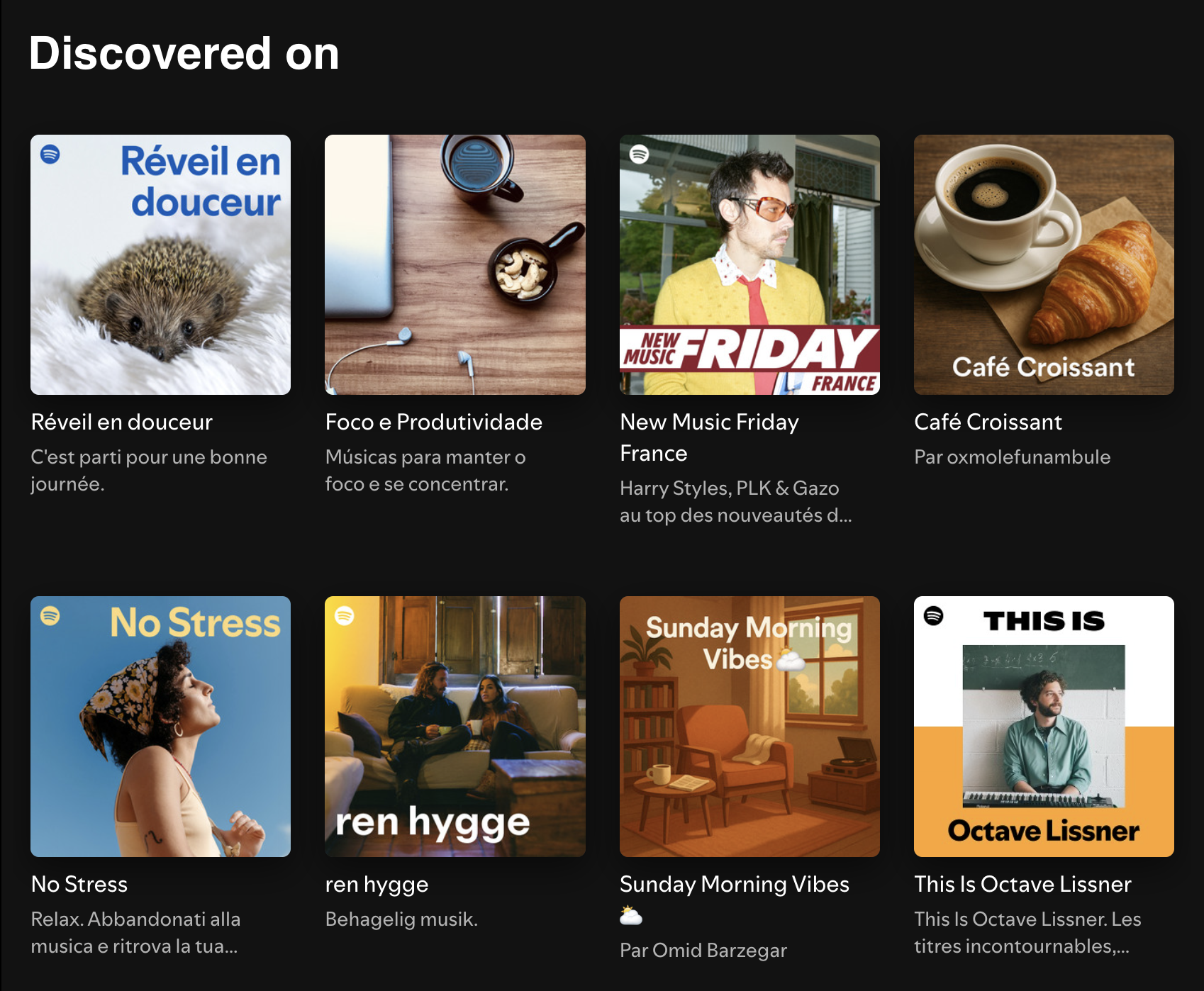
Before submitting your music anywhere, your Spotify presence should be fully optimized. A complete Spotify for Artists profile with professional images, an updated bio, and consistent branding builds trust with both curators and listeners. Pro tip: tools like Music Tomorrow can help you get recommendations on how to improve your artist profile.
Having a release planning is equally important: upload your music early, pitch it ahead of time, and coordinate your promotional efforts around release day. Pre-save campaigns, teaser content, and posting on your social media help create early momentum, which is essential for both editorial and algorithmic success.
Metadata accuracy also plays a crucial role: genre, mood, and instrumentation tags help Spotify and curators understand where your music belongs. Mislabeling your track can reduce its chances of being placed in relevant playlists.
The playlisting landscape in 2026 is more niche-driven than ever. Instead of broad genre playlists, listeners are gravitating toward mood-based and activity-based playlists such as “late-night chill,” “focus beats,” or “indie road trip.”
For artists, this means thinking beyond genre and understanding the emotional or situational context of your song can help you target more relevant playlists and audiences.
Another key shift is the focus on engagement over follower count. A playlist with a smaller but highly active audience can outperform a much larger playlist with low interaction. And curators and algorithms alike now prioritize listener behavior rather than pure metrics.
Transparency is also improving: Spotify continues to crack down on fake playlists and artificial streaming, making it more important than ever to work with reputable curators and trusted platforms.
👉 Discover how Spotify’s prompted playlists work
In this evolving ecosystem, platforms like Groover have become essential tools for artists. Groover connects musicians directly with verified playlist curators, but also blogs, radio stations, and industry professionals.
What sets Groover apart is its transparency: artists receive guaranteed feedback within seven days, or their credits are refunded, which ensures that submissions are actually reviewed.
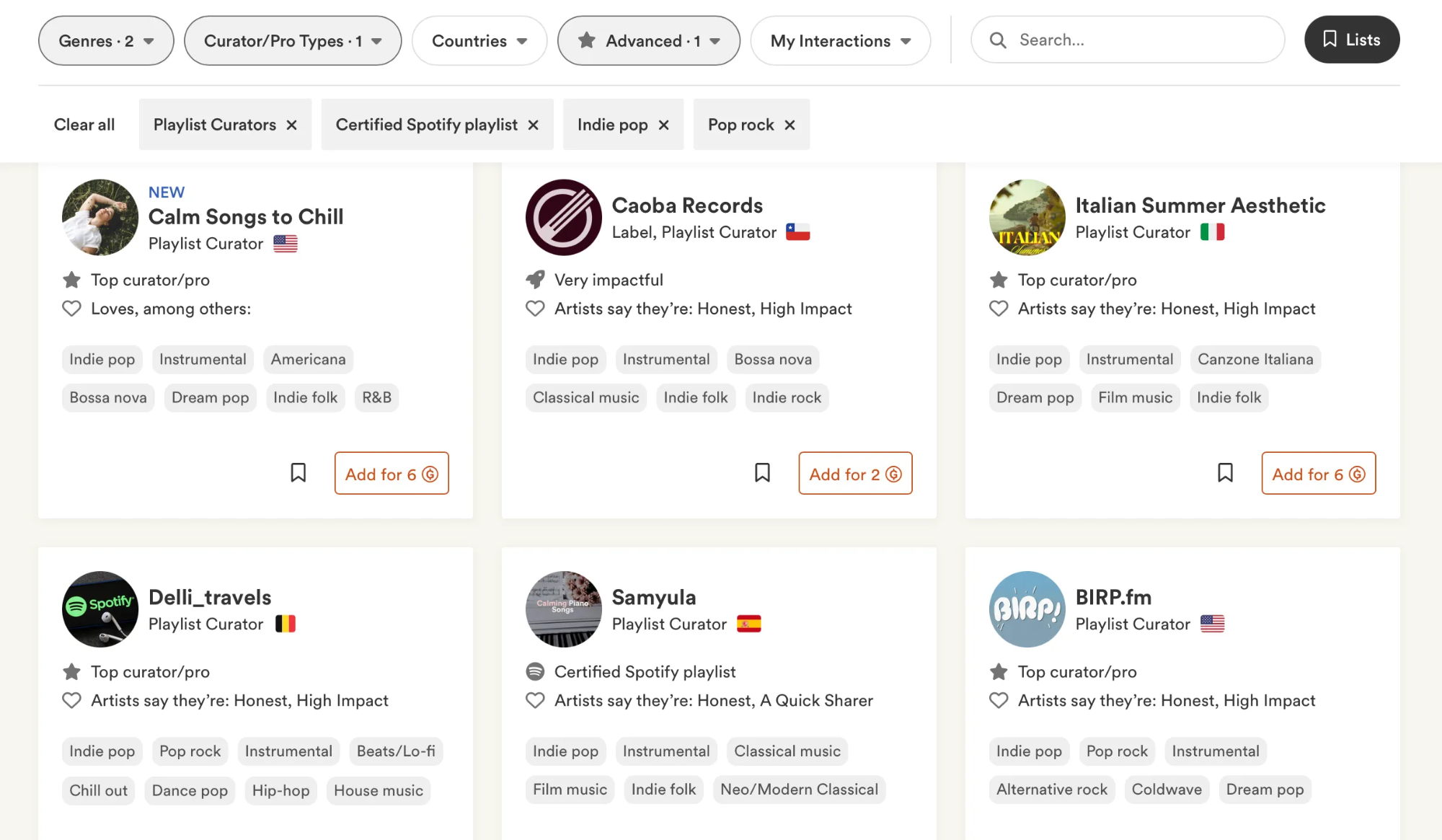
Groover also allows artists to filter curators by genre, location, and playlist impact. This makes it easier to target playlists that genuinely match your sound, rather than wasting time on irrelevant submissions.
By submitting to a curated selection of independent playlist curators, you can secure organic placements that generate real engagement. These placements often serve as stepping stones toward algorithmic playlists and, in some cases, editorial consideration.
Another thing to add into your strategy is to understand who your listeners and fans are: Where are they located? What music genres do they like? How old are they? Knowing this will allow you to have a strategic and tailored approach. So using tools like Chartmetric can be very interesting to consider as part of your playlisting strategy.
A successful Spotify playlisting strategy is built on understanding how the ecosystem works and playing the long game. Editorial playlists, algorithmic recommendations, and independent curators all play a role, and they are all influencing one another.
Artists who focus on preparation, authenticity, and targeted outreach are best positioned to succeed. By optimizing your profile, planning releases strategically, engaging your audience in advance, and using platforms to reach out to verified curators, you can dramatically increase your chances of landing in impactful playlists.
In 2026, playlisting is about smart strategy, real connections, and music that resonates with listeners, one playlist at a time.
.webp)
.webp)

