

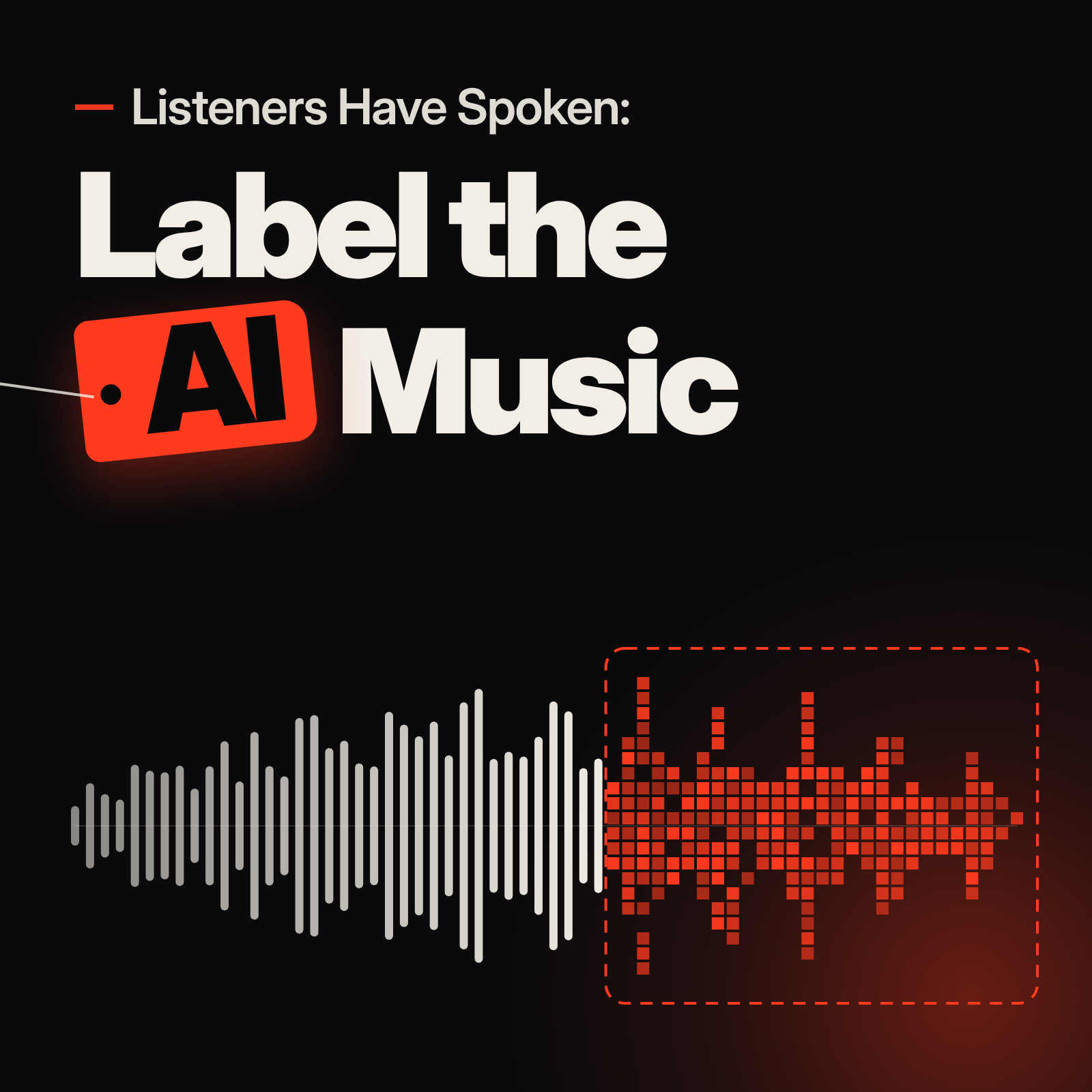


Generative AI has become one of the biggest talking points in music, and audiences have now made their view clear. Deezer and Ipsos have published the second edition of their annual AI music study, and the main finding leaves little room for doubt: 80% of respondents across eight countries say fully AI-generated music should be clearly labeled. The same share wants labels on AI-assisted music too. This year was the first time the study asked about AI-assisted tracks.
Ipsos surveyed 9,000 adults in the US, Canada, Brazil, the UK, France, the Netherlands, Germany and Japan in October 2026. More than 6,600 of them use music streaming services.
American listeners show the sharpest change of mood. A year ago, 54% of US respondents saw AI as a valuable tool for musicians. That figure has now dropped to 37%. Only 51% believe AI will play a major role in music creation over the next decade, down from 62%. Nearly seven in ten worry that AI could make music less creative.
Trust is falling too. Among Americans who know about AI, only about one in five now name “trust” as one of their feelings toward it, down from almost a third last year. Ipsos sums up the US results as a shift “from enthusiasm to caution.”
Other markets show the same pattern. France has the strongest demand for transparency, with close to 90% wanting AI music labeled. Brazil is the exception: it remains the most open market, and 61% of Brazilians see AI as a useful creative tool.
The study also exposes a blind spot. Around three quarters of streaming users believe their playlists contain no fully AI-generated music. Deezer’s own data on new subscribers tells a different story: almost 57% of users who joined in October already had at least one fully AI-generated track in their playlists.
The volume explains why. Deezer says it now receives close to 90,000 fully AI-generated tracks every day, which is more than half of all its daily deliveries on peak days. The company also estimates that up to 85% of the streams on those tracks in 2025 were fraudulent.
Listeners don’t reject technology across the board, but they do separate tools from replacement:
The industry is moving in the same direction. The RIAA and IFPI are pushing for standard “AI-generated” and “AI-assisted” tags on streaming services, and Deezer is introducing a toggle that lets users filter fully AI-generated music out of search results.
At Octiive, we see this change every day. Responsible distribution now means real transparency. It also means protecting human artists from having their royalties diluted by mass-produced content and fake streams. That is why we:
Our advice to independent artits is simple. Use AI as a tool if it helps you, but keep yourself at the center of your music, and be open about how it was made. Listeners are paying closer attention than ever, and authenticity is quickly becoming your biggest competitive advantage.
Source: Music Business Worldwide, “80% of people want AI music labeled, says Deezer/Ipsos survey” (November 17, 2026).

Ressourcen
Musik veröffentlichenMusik online verkaufenMusik-TantiemenFür LabelsOctiive PathwayDistroKid-AlternativenVertrieb wechseln

