
.svg)


.webp)
Last week we covered Spotify's new "AI Persona" badge and what it means for artists. Well, that didn't take long: Apple Music is now following with its own move.
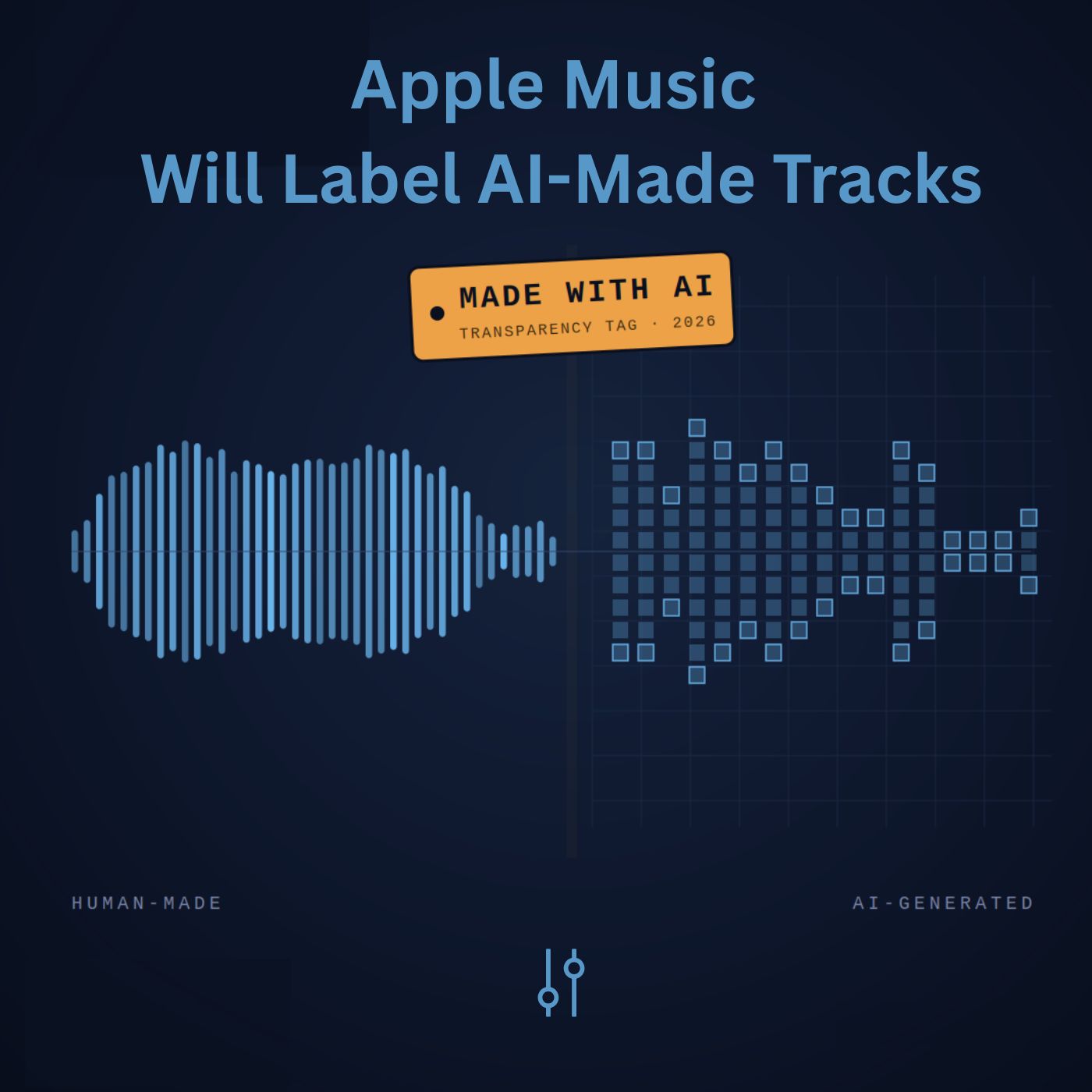
Apple Music has told its industry partners that it will introduce a "Made With AI" label on tracks later this year. Any song where "a material portion of the content" was created using AI will carry the label — and it will be up to labels and distributors to tag those tracks correctly.
This builds on the AI Transparency Tagging system Apple Music rolled out back in March, which lets content providers flag in Apple's systems whether and how AI was used on a track. Until now, that information stayed behind the scenes. Soon, listeners will see it.
An exact launch date hasn't been announced yet, but the direction is clear.
The numbers speak for themselves. Apple Music VP Oliver Schusser said earlier this year that more than a third of all tracks uploaded to the platform are 100% AI-generated. He also made a point that should make everyone in this business pay attention:
"Every label in the world is delivering AI, even if they might not know about it."
Apple has its own detection software running in the background, but the official line is that responsibility for disclosure sits with those who upload the music. In other words: with labels, with distributors — and with you.
Apple isn't acting alone here. Look at what's happened in just the past few months:
Meanwhile, the industry is still working out its relationship with AI generators like Suno and Udio — some rightsholders are suing, others are signing licensing deals, and the major platforms are building their own AI tools. It's messy. But on one thing, everyone now agrees: listeners deserve to know how a track was made.
If you distribute through Octiive, here's the practical takeaway:
1. Be honest about how your music was made. Using AI tools is not forbidden — but hiding it is becoming a real risk. Undisclosed AI content can lead to takedowns, blocked royalties (as Tidal has already shown), or account-level consequences.
2. Disclosure is moving from optional to mandatory. Apple's new labels make it explicit: distributors are required to tag AI content. That requirement flows through to us — and from us to you. Expect AI disclosure to become a standard part of the upload process, not a nice-to-have.
3. Using AI as a tool is different from being replaced by it. These policies target tracks where a material portion of the content is AI-generated. Using AI for mastering assistance, stem separation or ideation is a different category from generating a full track with a prompt. Know which side of that line your release sits on — and declare it accurately.
4. Transparency protects real artists. If a third of uploads are already fully AI-generated, honest labeling is what keeps human-made music distinguishable — and keeps your royalties from being diluted by content farms gaming the system.
We said it last week about Spotify, and Apple has just confirmed it: this is not a passing trend, it's the new baseline. Every major DSP is converging on the same principle — AI music is allowed, but it has to be declared.
At Octiive, we've already updated our Terms & Conditions with a dedicated AI-generated content policy, and we work closely with our DSP partners to make sure your releases stay compliant. If you're unsure whether your release needs to be flagged, reach out to us before you upload. It's a two-minute conversation that can save your release — and your account.
Your music, everywhere. Honestly labeled.
— The Octiive Team
.webp)
.webp)

